
The offline promise
The ocean can take your signal.
Not your story.
Download your case before embarkation and look for the Ready for Voyage seal. From that moment, every clue, recording, map, hint and accusation screen works with the phone in airplane mode — for the whole sailing.
for
Voyage
Why this is the hard part
Shipboard Wi-Fi is the wrong thing to bet a mystery on.
It is expensive, it is slow, and mid-Atlantic it is frequently nothing at all. A game that phones home for its next clue is a game that stops working on exactly the days you have time to play it.
How the promise is kept
Three mechanisms,
not one intention.
Being careful is not a mechanism. Offline play is enforced three separate ways, so a mistake in one is caught by the others before it ever reaches a passenger.
Nothing in the game can reach the network
The investigation engine has no way to request a remote file. Media is resolved from local storage or it fails immediately — there is deliberately no remote option to fall back to, so no part of the case can quietly come to depend on one.
A guard that watches at runtime
A guard sits over the app’s network functions and records any attempt to use them during play, with the exact line responsible. In testing it fails loudly. It is how an accidental request gets caught in a lab rather than in the middle of an ocean.
Verification before the seal appears
A case only reports Ready for Voyage once every required file has been downloaded, matched against its expected size and checksum, and read back successfully. A partial download does not get a seal.
The release rule
Before any case ships, it is played end-to-end on a real device in airplane mode — once using augmented reality, once refusing it — and every investigation must close. A case that fails that test is not voyage-ready, whatever the install screen says.
Augmented reality
Always optional. Genuinely optional.
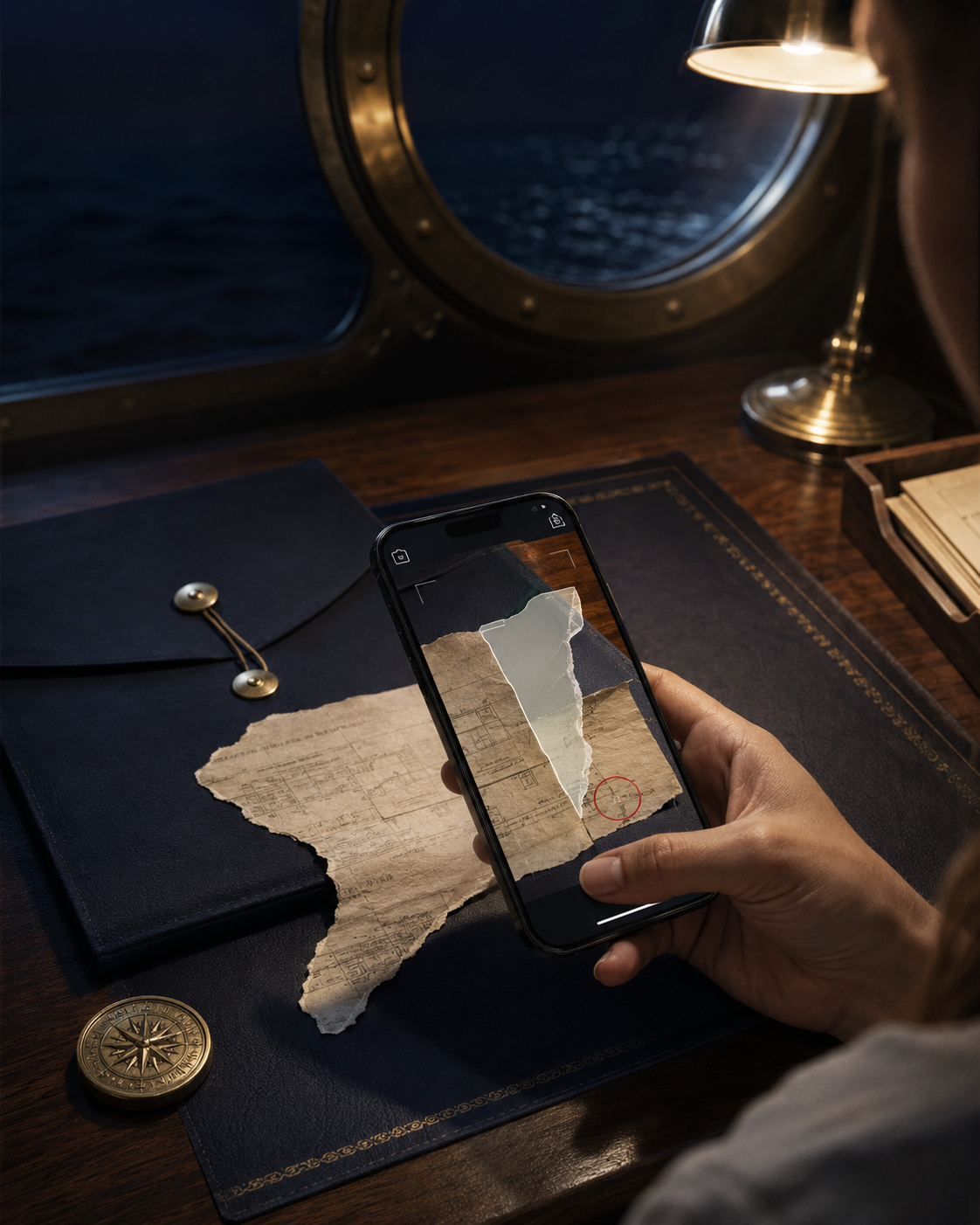
Some evidence rewards holding your phone up to it: a torn page that reassembles, a deck that fills in around you. It is lovely, and it is never required.
Every AR moment has an alternative that carries the same information, and the case is tested both ways before release. Refusing AR for the entire voyage — because the light is wrong, because you are at dinner, because you simply do not want to — costs you nothing but the flourish.
Field missions, and missed ports
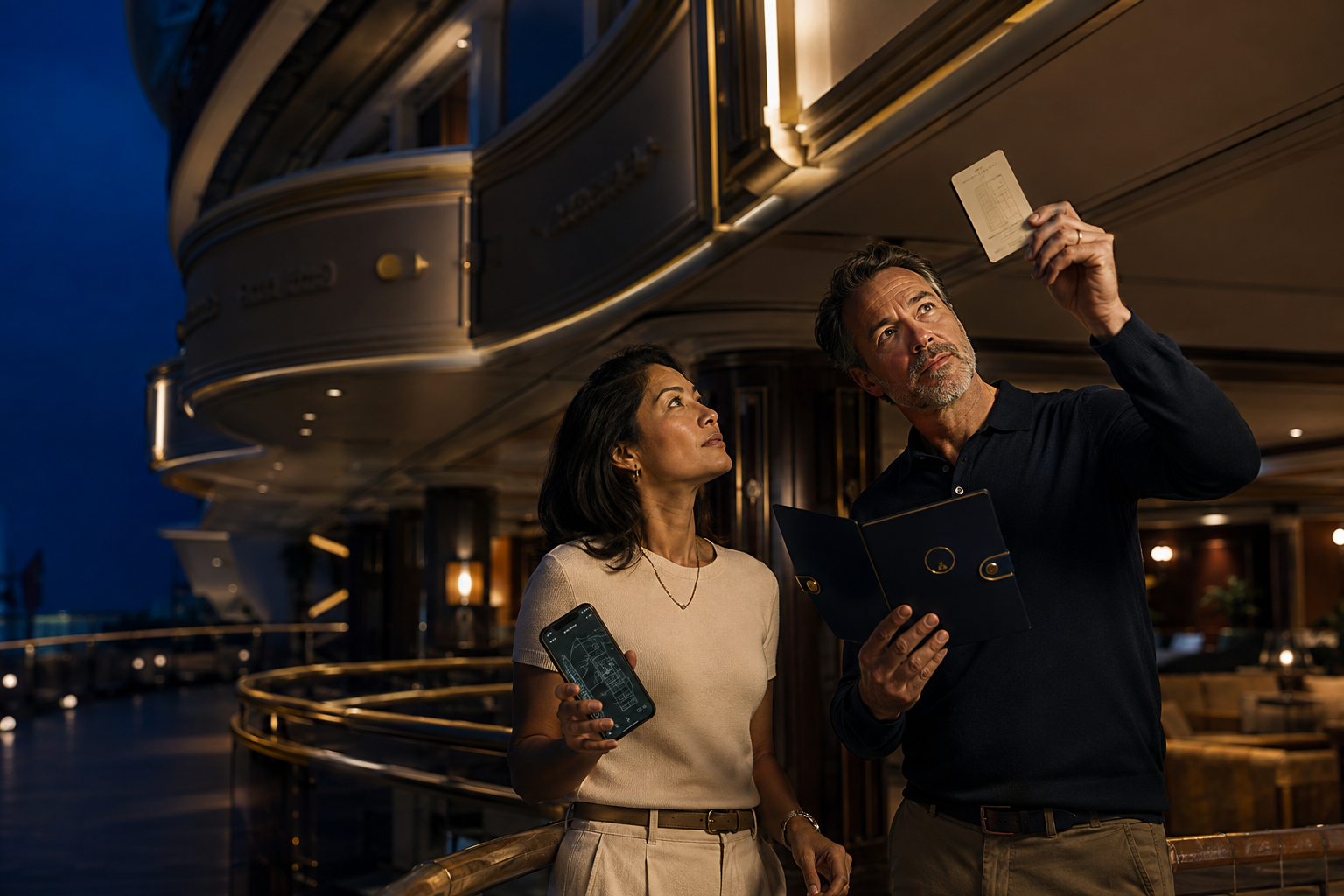
Optional shipboard moments turn public spaces into part of the investigation. None of them requires a crew-only area, none asks you to block a walkway, and each has an in-app or map equivalent.
That matters more than it sounds. Ports get skipped, venues close, and itineraries change at sea. Because no single location can carry evidence on its own, a changed itinerary costs you atmosphere — never progress, and never the solution.
What stays on your device
Your notes, your progress, your accusation and your rank live in local storage on the phone. There is no account to sync and no server keeping score, because the whole design assumes there is no connection to reach one.
Ready for voyage
Find the case waiting on your cruise.
Check your sailing, reserve your edition, and download before you leave the pier.
Find my case